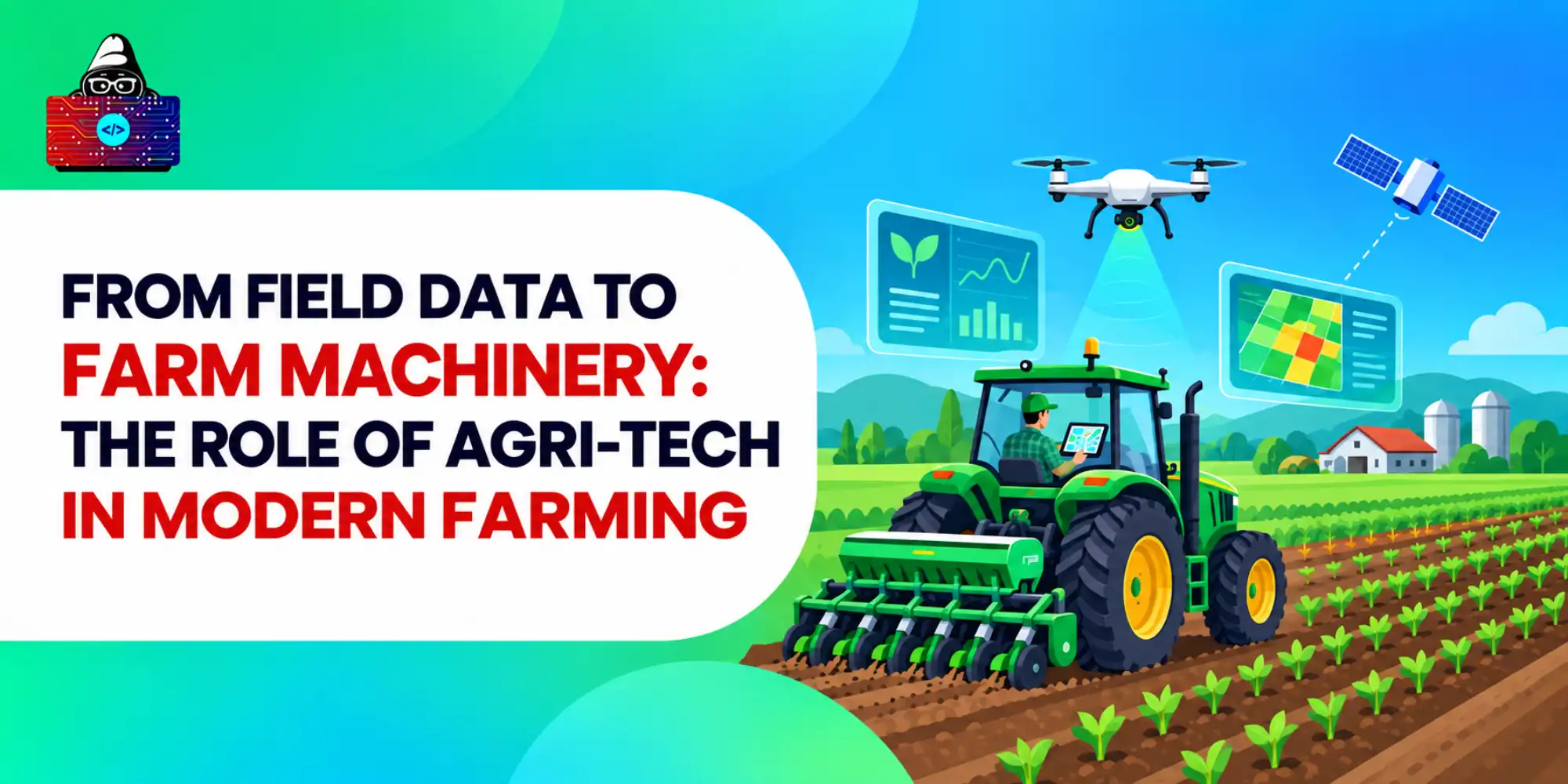

Modern farming has always depended on good judgment, but farmers now have far more information available before making a decision. Cameras and software can distinguish crops from weeds, while connected machinery can report developing mechanical problems. Agri-tech is changing farming by making conditions easier to measure and giving producers more precise ways to respond.
Precision Agriculture Makes Field Differences Visible
A field may look uniform from the road while containing significant differences in soil, drainage, nutrients, elevation, and crop performance. Precision agriculture helps farmers identify those variations instead of managing every acre the same way.
GPS-guided equipment, yield monitors, soil sampling, satellite imagery, and field mapping can build a more detailed picture of crop performance. Farmers can use that information to create management zones or variable-rate application plans.
Fertilizer, seed, and other inputs can then be applied according to conditions in specific areas. The potential benefit is practical: fewer resources are wasted where they are unnecessary, while areas with different needs receive a more appropriate amount.
The quality of the decision still depends on the quality of the data. A detailed map does little good if measurements are inaccurate or a farmer lacks enough historical information to interpret an unusual result.
Sensors Bring Field Conditions Closer to Real Time
Traditional field scouting remains useful, but a farmer cannot physically inspect every acre throughout the day. Connected sensors can fill some of those gaps.
Soil moisture sensors, for example, can provide data from specific depths. Combined with weather information, those readings can help determine whether irrigation is actually necessary rather than relying solely on a fixed schedule.
Weather stations can measure local rainfall, temperature, humidity, and wind conditions. That matters because conditions at a farm may differ from measurements taken at a regional weather station miles away.
The goal is not simply to collect more numbers. Useful systems turn measurements into information that can support a specific decision, whether that involves irrigation, planting, spraying, or harvest timing.
Automation Is Changing How Equipment Works

Agricultural machinery has become increasingly precise. GPS guidance and automatic steering can help tractors maintain consistent paths across a field, reducing unnecessary overlap during planting or input application.
More advanced equipment uses cameras, sensors, and software to respond to conditions while moving. Some spraying systems can identify individual weeds and activate nozzles selectively instead of treating the entire field uniformly. Automated systems are also being developed for harvesting, cultivation, and other repetitive operations.
These technologies can be particularly valuable when labor is limited or when a task needs to be completed during a narrow weather window. Automation still requires supervision, calibration, maintenance, and workers who know how to respond when a system behaves unexpectedly.
Smarter Farming Still Depends on Physical Machinery
Software receives much of the attention surrounding agri-tech, but agriculture remains physically demanding work. Digital controls ultimately rely on tractors, combines, pumps, gearboxes, hydraulic systems, and other machinery to perform the task.
That makes manufacturing technology part of the agri-tech story as well. Production methods such as the shell mold casting process can be used to manufacture metal components where dimensional accuracy and consistent surface quality are important. The performance of a digitally controlled machine still depends on the reliability of the physical parts carrying loads, transferring power, and operating in difficult conditions.
Farm machinery faces vibration, dust, moisture, temperature swings, and repeated loads. Adding sophisticated electronics does not reduce the importance of mechanical durability.
Equipment Data Can Change Maintenance Decisions
Connected machinery can also help farmers see what is happening inside equipment rather than waiting for a visible breakdown. Sensors and onboard diagnostic systems can track operating temperature, pressure, engine conditions, fuel use, and fault codes.
Patterns in that information may reveal a developing problem before a machine stops working. That can give a farm an opportunity to schedule maintenance between critical operations instead of losing equipment during planting or harvest.
Maintenance data becomes especially useful when it is connected to service history. Repeated failures of the same component may point to an operating condition or maintenance practice that deserves investigation rather than another identical repair.
Livestock Technology Extends Monitoring Beyond Crops
Agri-tech also plays a growing role in animal agriculture. Wearable sensors and automated systems can monitor activity, feeding behavior, temperature, or other indicators that may signal a change in an animal’s condition.
Automated feeding and milking equipment can collect additional information while performing routine work. Farmers can use these systems to identify animals that may require closer observation.
Technology does not replace regular animal care. Its value comes from helping producers notice changes sooner, particularly in larger herds where continuous individual observation is difficult.
Modern farming is becoming more data-driven, but technology remains a tool rather than the objective. Agri-tech gives producers additional ways to apply that judgment with greater precision. Check out the infographic below to learn more.