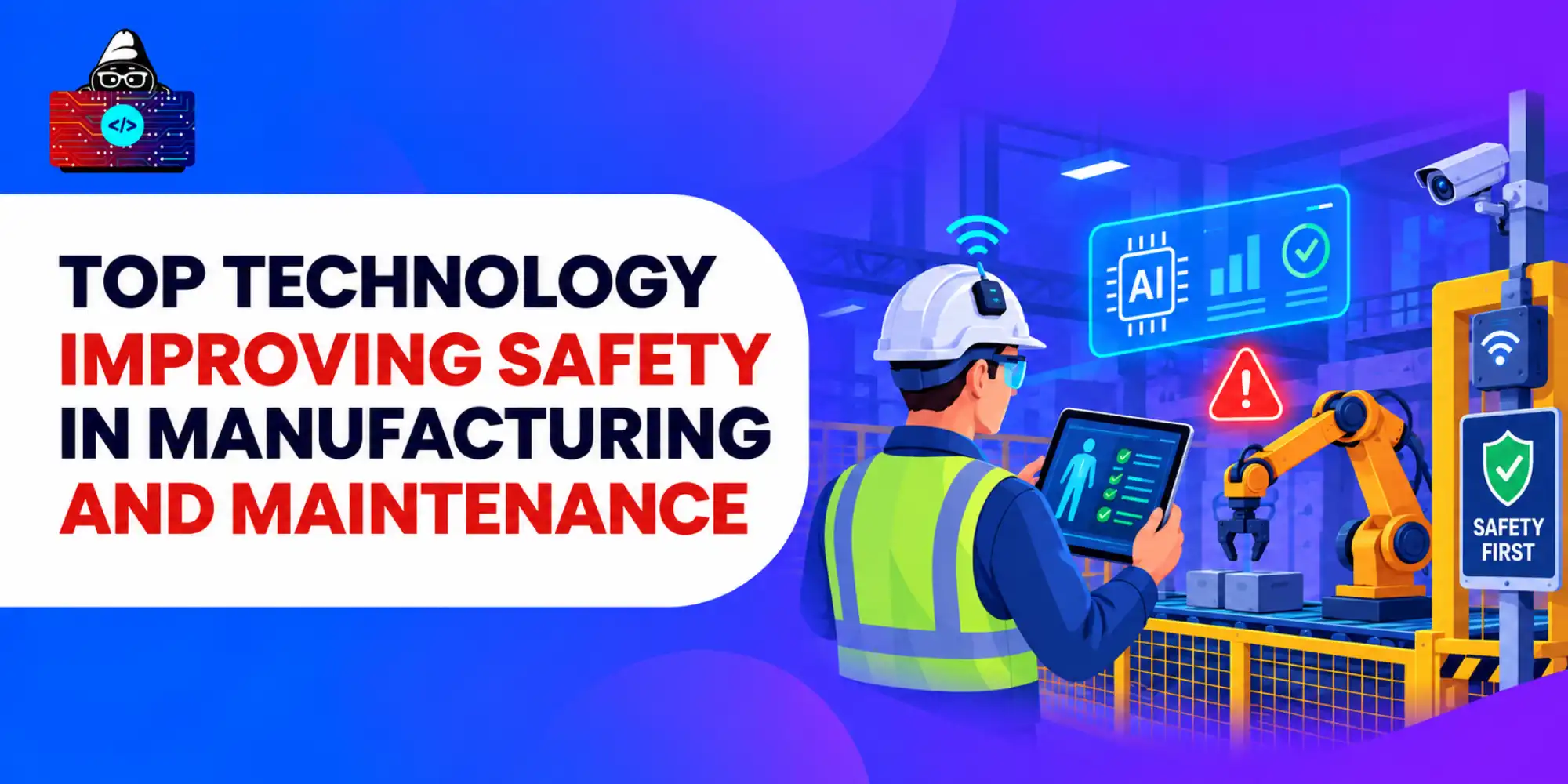

Manufacturing and maintenance work puts people close to heavy machinery and other hazards. Traditional safety practices such as machine guarding, lockout procedures, inspections, and personal protective equipment remain essential. Technology adds another layer by giving workers better information and, in some cases, keeping them farther from hazardous conditions.
Machine Vision Can Detect Unsafe Conditions
Industrial cameras have traditionally been associated with quality control, but computer vision is expanding their role. Cameras paired with software can monitor defined areas for specific conditions, such as a person entering a restricted zone while machinery is operating.
Some systems can also identify whether required protective equipment is present or detect objects left in hazardous locations. Unlike a supervisor, a camera system can continuously monitor the same area without losing concentration.
There are limits. Lighting, camera placement, obstructions, and false alerts can affect performance. Facilities also need clear policies covering employee privacy and the use of recorded footage. Computer vision works best as an additional detection system rather than a replacement for physical guarding and established procedures.
Sensors Give Maintenance Teams Earlier Warnings
A machine rarely jumps directly from healthy operation to complete failure. Bearings may begin vibrating differently. Motors can run hotter. Lubricants may accumulate particles that indicate internal wear.
Condition-monitoring sensors can track variables such as vibration, temperature, pressure, current, and acoustic signals. Maintenance teams can use changes in these measurements to investigate equipment before a developing fault causes a larger problem.
This has safety implications beyond preventing downtime. Equipment failures can expose workers to broken components, unexpected movement, leaks, overheating, or other hazards. Earlier detection gives technicians a better opportunity to plan repairs rather than responding to a failure under time pressure.
Companies using comprehensive maintenance services can also incorporate condition data into broader inspection and repair planning instead of treating every maintenance task as an isolated event.
Connected Wearables Can Monitor Worker Exposure
Wearable technology can provide information about conditions workers encounter throughout a shift. Depending on the facility and application, devices may track location, noise exposure, environmental conditions, or proximity to equipment.
For example, a connected gas detector can alert a worker to a hazardous atmosphere while also sending information to another employee or control point. Proximity systems can warn pedestrians and equipment operators when they are approaching each other in areas with limited visibility.
Wearables need a defined purpose. Collecting large volumes of employee data without a clear safety application can create privacy concerns while producing little practical value. Organizations should identify the hazard first and then determine whether a wearable can meaningfully reduce the associated risk.
Drones and Robots Reduce Direct Exposure
Some inspections require employees to work at height, enter confined spaces, approach hot equipment, or access areas containing potentially hazardous materials. Drones and robotic inspection systems can perform an initial assessment without immediately sending a person into those environments.
A drone equipped with a high-resolution or thermal camera, for instance, can inspect roofs, elevated structures, tanks, or difficult-to-reach equipment. Ground robots can enter certain confined or hazardous areas to collect video, temperature readings, gas measurements, or other data.
These tools do not eliminate the need for human inspection. They can, however, provide information that helps a technician decide whether physical entry is necessary and what precautions should be taken beforehand.
Digital Work Instructions Improve Maintenance Consistency
Maintenance safety depends heavily on having accurate information at the point of work. Paper manuals and outdated instructions create problems if technicians cannot easily confirm the correct procedure for a specific asset.
Digital work instructions can provide current procedures, diagrams, equipment histories, required tools, and safety steps through a tablet or other device. Some platforms can require technicians to verify critical steps before proceeding.
Augmented reality is extending this concept further. A technician wearing compatible equipment may be able to view instructions while working or connect remotely with a specialist who can see the same equipment. The technology is most useful when the underlying information is accurate.
AI Can Help Find Patterns Humans May Miss
Industrial facilities generate large amounts of data through sensors, maintenance records, alarms, inspections, and production systems. Artificial intelligence can help analyze that information for patterns associated with equipment degradation or recurring incidents.
A system might identify that a certain combination of vibration and temperature changes tends to occur before a particular component fails. Safety teams can also analyze incident and near-miss records to identify recurring conditions that deserve attention.
AI recommendations still require human review. Poor-quality data, missing context, or unusual operating conditions can produce misleading conclusions. These systems should support technical judgment rather than replace it.
Technology improves manufacturing safety most effectively when it addresses a known hazard and fits into existing operational controls. Their value comes from giving people earlier warnings, better information, and safer ways to complete necessary work. Look over the infographic below for more information.