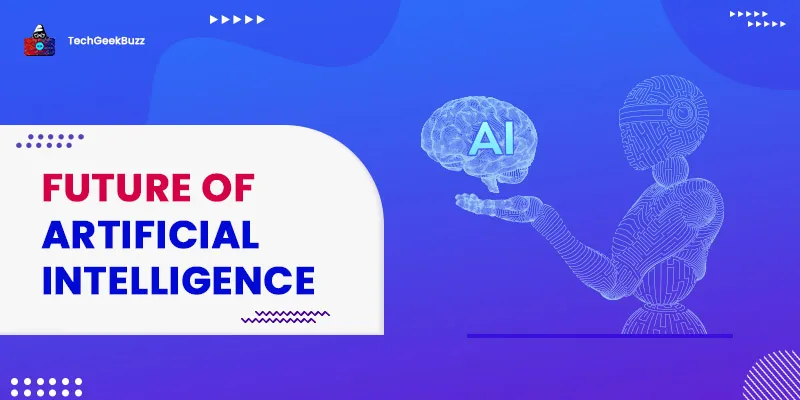

Artificial intelligence is no longer a topic we read about in science fiction films or technology seminars. It has quietly become part of everyday life. From intelligent assistants that help organize our schedules to tools that generate emails, images, or code within seconds, AI is changing the way we live and work. Among the many advancements in artificial intelligence, Generative AI stands out as one of the most transformative technologies because it can not only analyze information but also create entirely new content. As we enter the future world, agentic AI courses are predicted to have a strong impact on education, healthcare, business, creativity, and even the way humans interact with technology. Understanding its role today will help individuals prepare for the AI-driven future.
In this article, we will explore:
- What Artificial Intelligence is
- The different types of AI
- How Generative AI is transforming industries
- The opportunities and risks associated with AI
- The future role of humans in an AI-powered world
What is Artificial Intelligence?
Artificial Intelligence is a branch of computer science that focuses on building machines or computer systems capable of performing tasks that normally require human intelligence.
These tasks include:
- Learning from data
- Recognizing patterns
- Making decisions
- Understanding language
- Solving problems
In simple terms, AI allows machines to simulate human thinking and decision-making abilities.
Today, AI powers many technologies we interact with daily. For example:
- Voice assistants like Siri or Google Assistant
- Self-driving vehicle technology
- Recommendation systems on Netflix and Amazon
- Fraud detection systems in banking
- Chatbots and customer support automation
AI has transformed the way businesses operate and the way individuals interact with technology.
Types of Artificial Intelligence
Artificial Intelligence systems can be classified based on their capabilities and functionalities.
1. Capability-Based Types of AI
a. Narrow AI (Weak AI)
Narrow AI is designed to perform a specific task efficiently. It cannot operate beyond its programmed scope.
Examples include:
- Speech recognition systems
- Image recognition tools
- Recommendation engines
- Virtual assistants
Most AI systems used today fall into this category.
b. General AI
Artificial General Intelligence (AGI) refers to AI systems that can perform any intellectual task that a human can do.
Such systems would possess reasoning abilities, learning skills, and problem-solving capabilities similar to humans.
However, General AI does not yet exist and remains an area of research.
c. Super AI
Super AI refers to a hypothetical form of artificial intelligence that would surpass human intelligence in every aspect, including creativity, problem-solving, and emotional understanding.
Like General AI, Super AI is still theoretical.
2. Functionality-Based Types of AI
a. Reactive Machines
These systems react only to current inputs and cannot store past experiences.
Example: IBM’s Deep Blue chess system.
b. Limited Memory AI
These systems can store past data temporarily and use it to improve future decisions.
Example: Self-driving cars.
c. Theory of Mind AI
This future concept refers to AI systems that can understand human emotions, intentions, and beliefs.
d. Self-Aware AI
Self-aware AI would possess consciousness and self-understanding similar to humans. This type of AI does not exist today.
What is Generative AI?
Generative AI is a category of artificial intelligence that can generate new content instead of only analyzing existing data.
It uses advanced machine learning models to create outputs based on human instructions or prompts.
Generative AI can produce:
- Text
- Images
- Videos
- Music
- Code
- Design ideas
- Marketing content
For example, a marketing professional struggling to write a campaign idea can enter a prompt into an AI tool and instantly receive several creative suggestions. This shift from information processing to content creation is what makes Generative AI one of the most revolutionary AI developments.
How Generative AI Is Shaping Daily Life
Generative AI has already started influencing everyday activities across different professions.
Some common real-world examples include:
|
Use Case |
How Generative AI Helps |
|
Students |
Simplifies complex topics and generates study notes |
|
Designers |
Creates visual design ideas and prototypes |
|
Developers |
Generates code snippets and programming suggestions |
|
Business Owners |
Creates marketing content, emails, and social media posts |
|
Customer Support |
Automates responses and improves response time |
In most cases, AI acts as an assistant rather than a replacement for humans, helping professionals save time and increase productivity.
Generative AI and Creativity in the Future World
One of the most exciting aspects of generative ai courses is their ability to enhance human creativity. Artists, writers, musicians, and creators are increasingly turning to AI as their co-creator. For example, a writer may use an AI-powered tool to explore different story ideas or experiment with multiple plot directions. Similarly, a musician might use AI to generate melodies and sound variations while composing music. Although AI can assist with generating ideas, the final creation still reflects human imagination and decision-making. AI simply makes the creative process faster, more experimental, and more accessible. This collaboration between human creativity and intelligent systems enables individuals with great ideas but limited technical skills to bring their visions to life.
The Role of Humans in an AI-Driven Future
One of the biggest concerns people have about AI is job replacement. However, the future will likely favor individuals who know how to collaborate with AI rather than compete with it.
AI systems provide:
- Speed
- Large-scale data analysis
- Automation
- Pattern recognition
Humans provide:
- Creativity
- Ethics
- Emotional intelligence
- Strategic thinking
- Contextual understanding
For instance:
In healthcare, AI can analyze medical data quickly, but doctors still make the final diagnosis. In education, AI can personalize learning experiences, but teachers guide and mentor students. The most successful professionals will be those who can combine human insight with AI capabilities.
Learning and Career Opportunities in Generative AI
As AI technologies become mainstream, developing AI-related skills is becoming essential.
Professionals from different industries are now exploring training programs that help them understand how AI tools work and how they can be applied in real-world scenarios.
Popular skills related to Generative AI include:
- Understanding AI models and how they generate outputs
- Writing effective prompts
- Editing and improving AI-generated content
- Applying AI tools for business productivity
- Using AI responsibly and ethically
Many learners are also enrolling in practical programs such as Generative AI training in Hyderabad or similar hands-on learning courses that focus on real-world applications.
(Internal link example: Generative AI Training in Hyderabad )
Ethical and Responsible Use of Generative AI
While Generative AI offers enormous potential, it also raises important ethical concerns.
Some major concerns include:
- Spread of misinformation
- Copyright and intellectual property issues
- Bias in AI models
- Over-reliance on automated systems
AI-generated content should always be reviewed and verified before being used publicly. Companies must also be transparent when AI systems interact with customers.
In the future, governments and organizations will likely establish clear regulations and ethical frameworks to ensure AI is used responsibly.
Risks and Challenges of Artificial Intelligence
Despite its benefits, AI also presents several potential risks.
1. Job Automation
AI systems can perform repetitive tasks faster and more efficiently than humans. This could lead to job displacement in some industries.
However, new roles related to AI management, development, and oversight are also emerging.
2. Autonomous Weapons
Military systems powered by AI could operate without human control, raising ethical concerns regarding safety and accountability.
3. Cybersecurity Threats
While AI can strengthen cybersecurity systems, malicious actors may also use AI to develop sophisticated cyber attacks.
4. Misinformation and Deepfakes
Generative AI can create highly realistic images, videos, and audio content, which could be misused for misinformation.
Managing these risks will require responsible AI development and global cooperation.
Future Applications of Artificial Intelligence
AI will continue transforming multiple industries in the coming decades.
1. Healthcare
AI systems will assist doctors in diagnosing diseases, analyzing medical records, and recommending treatment options.
Remote healthcare powered by AI may improve access to medical services in underserved regions.
2. Education
AI will enable personalized learning experiences where students receive tailored content based on their learning pace and abilities.
Virtual reality and AI simulations may also make learning more interactive.
3. Finance
AI will improve fraud detection, financial forecasting, algorithmic trading, and automated investment management.
4. Cybersecurity
AI will play a critical role in detecting cyber threats, identifying vulnerabilities, and protecting digital systems.
5. Transportation
Autonomous vehicles, smart traffic management systems, and AI-powered logistics will make transportation safer and more efficient.
Conclusion
Artificial Intelligence is transforming nearly every industry and aspect of human life. Among the many AI technologies emerging today, Generative AI stands out as one of the most influential innovations, enabling machines to create content, automate workflows, and enhance human creativity. However, the future of AI will not be about replacing humans — it will be about collaboration between humans and intelligent systems. Individuals who understand AI technologies and develop the skills to work alongside them will be best positioned to succeed in the evolving digital economy. Rather than fearing artificial intelligence, the key is to learn, adapt, and use it responsibly to unlock new opportunities.